Home / Blog
When being a generalist paid off
Three takeaways I learned from redesigning a website for a non-profit
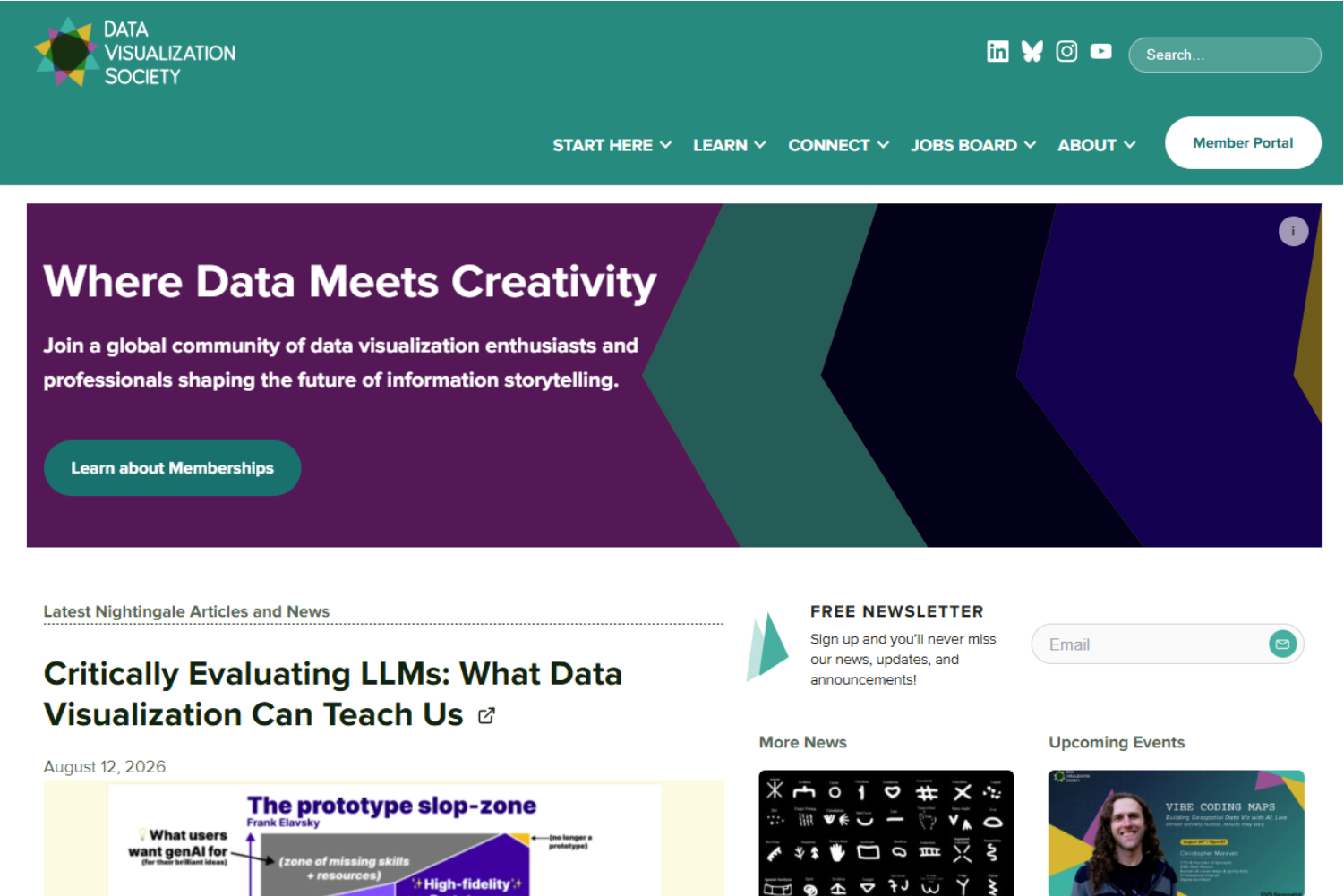
Table of contents
DVS launched a brand new site with an updated menu, design, and site structure (check out the case study to see the process). The DVS website was a critical channel to the organization’s success. It was where people could learn about DVS’s mission, learn about data viz, and most importantly, sign up to become a member.
I had the opportunity to lead the redesign with a small team and no budget, and it was the first time I’ve led something of this scale. Through this experience, I’ve learned a lot about web design, user experience and project management. In this post, I’d like to share some lessons I’ve gained.
But first, let’s get into the project timeline for context.
Two years in the making
The project started in 2024 and was completed by 2026.
Here’s what the timeline looked like:
- Feb 2024 - March 2025: Defining project scope and conducting user research. By March 2025, the project came to a halt
- May 2025 - October 2025: I stepped in as project manager to restart the project
- October 2025 - May 2026: I took a break for maternity leave, handed off the project to team members
- June 2026 - August 2026: Resumed project manager role and launched new site in August
We spent about a year creating project plans and conducting research. To be really honest, we probably could have completed this part in half the time, but there were some challenges building the right team, and the team lead was inexperienced in project management and UX design, dragging the timeline out longer than needed. Then everything came to a full stop as the board introduced new directors and we didn’t have anyone to lead the project in March 2025. Feeling frustrated by this roadblock, I volunteered to take over a few months later. This project felt too important to not happen, and I knew if we were successful, it would create so many positive outcomes for the community. People would have an easier time finding jobs, events, and education.
From internal to external ways of thinking
The first challenge I worked on was the site menu. It was not intuitive and difficult to navigate. Over the years, the website grew out of proportion and lacked focus. More importantly, it was built on the team’s internal model of navigating DVS. Internally, we know what Nightingale is. It’s a publication by DVS where the community could contribute articles. But to someone outside of the organization, they view Nightingale as a place to learn from the community; it’s where they see the latest development in data viz to further their industry knowledge. So, it makes sense to view Nightingale as an educational resource, a place to learn. The old menu reflected internal thinking where Nightingale was a menu option. In the new menu, we placed Nightingale under ‘Learn’, a goal many users have when they visit this site. This is just one example of how the site needed a central team to oversee its development and look at it as a whole from the user’s perspective.
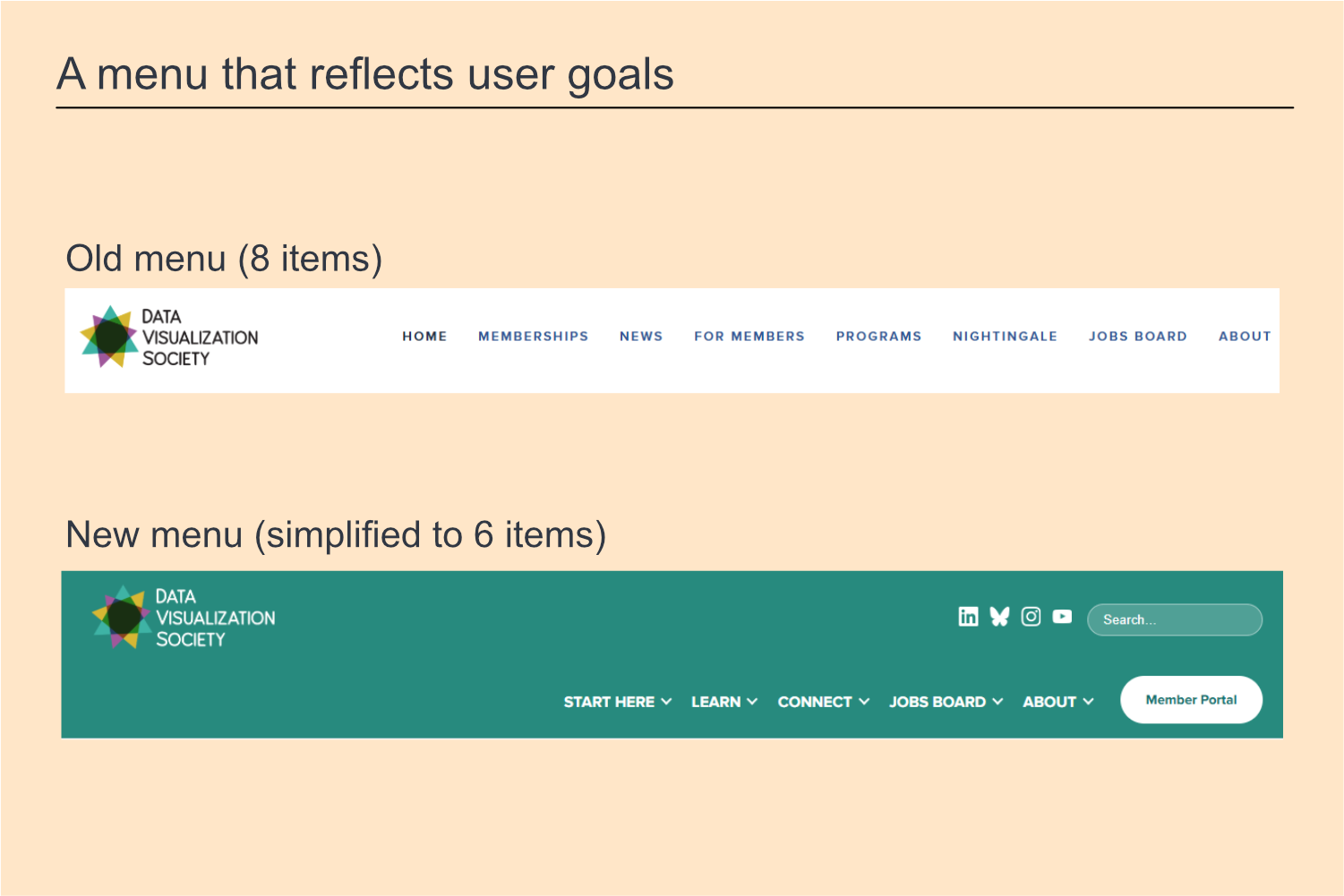
The new menu had items that were action-oriented, like 'Learn' or 'Connect'. It aligned a lot better to how users think about the site.
Centralize, centralize, centralize
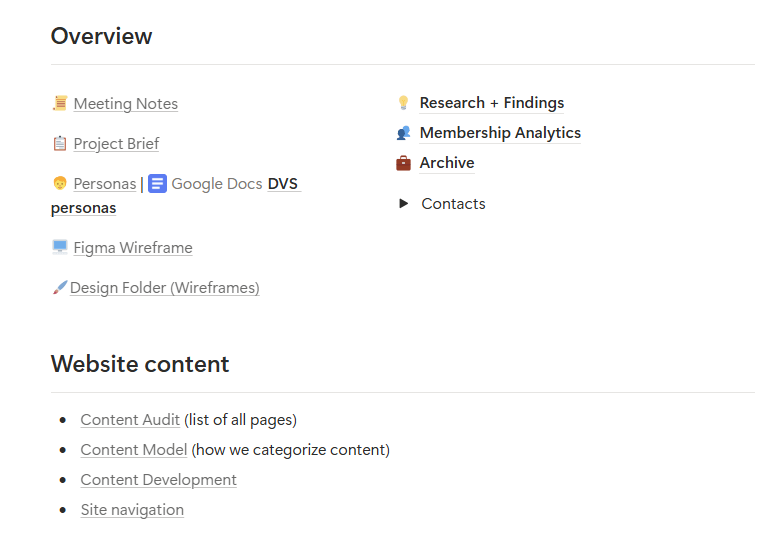
Centralization was key to keeping the project organized. At the start of the project, I built a central landing page in Notion to organize all of our assets, notes, designs…everything. The page was a central hub to find upcoming tasks, team members' contact info, meeting links, and more. Having this page made it easy to hand it off to others or delegate tasks quickly. I’d go to this page whenever I needed to look for something, and it was easy to share with others without needing to provide special access.
Being a generalist was critical for successful collaboration
It was slow to restart the project when I offered to lead it, but meeting by meeting, we got the ball rolling. It was me and two board directors. One was heavily involved in the community and has managed many volunteers so he was very resourceful. The other had a developer background and could build the site, so he was critical to making our ideas happen. My background intersected with all of theirs. I’ve built my own website (in fact, the site you’re reading this post on was built by me) so I understand how to think about the front and back end of a website. Furthermore, I used to create data viz and I have been working at DVS for more than 5 years. so I was more than knee-deep in the community. More than understanding the end user, I was the end user at one point. Together with all of these skills and experience, it helped me to quickly identify what was needed and how to resolve it.
Being a generalist always felt like a thorn in my career. The longstanding advice from career coaches is to specialize. There’s some truth to that in that if you try to please everyone, you please no one. But I like to see this as a spectrum. There are the people who are highly specialized in one are and those who are so general you cannot narrow down their focus. I like to think I’m somewhere in the middle. For some reason, I could never specialize. I tried a couple of tracks to specialize in. Email marketing, e-commerce, social media, websites….I learned a lot by trying to specialize, and then got all excited about using these skills more broadly. I couldn’t stick to one lane. To be honest, not being able to specialize has caused some anxiety for me. Why couldn’t I do it? Do I lack focus or drive? Eventually, I’ve come to accept that this is just how my brain works. The sum of the parts is way more interesting to work with than a single part. And somehow, having these broad skills has made me stand out as a communications professional. The website redesign allowed me to apply all the skills I’ve acquired over the years, and for that I’m extremely grateful.